




Founded in 2006, POSSE organizes grassroots movements around labor, poverty, and ecology while producing critical analysis to envision transformative social change.
Building Grassroots Power
Labor
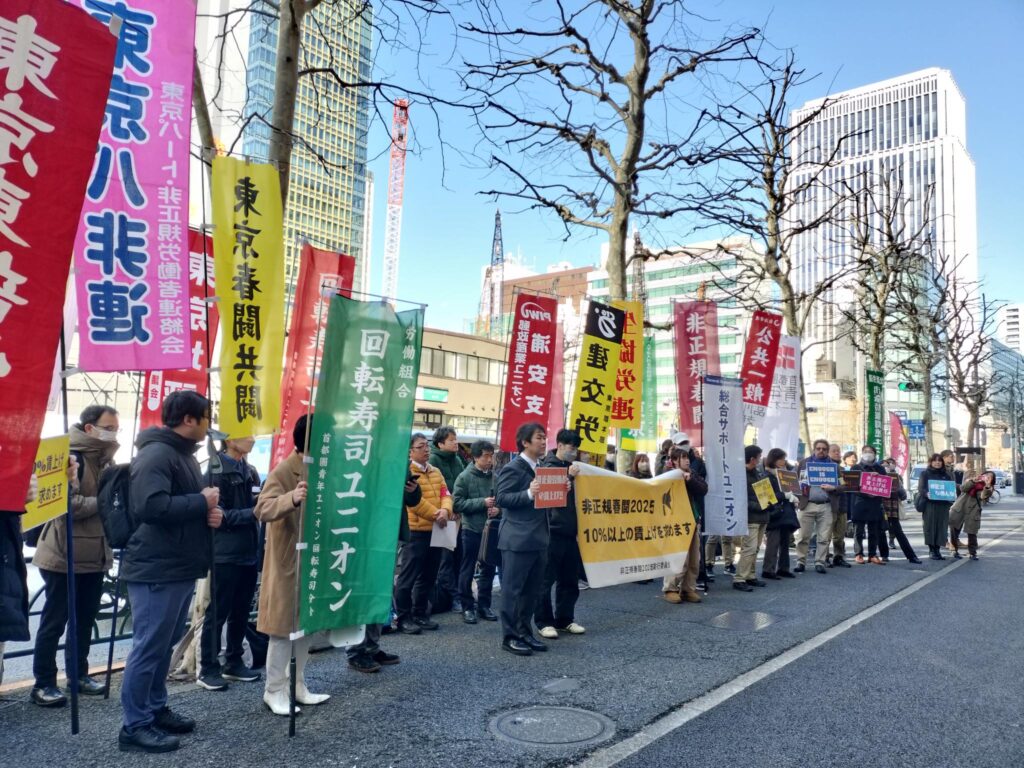
In 2014, our members founded a labor union to organize precarious workers in sectors such as education, nursing care, childcare, and logistics.
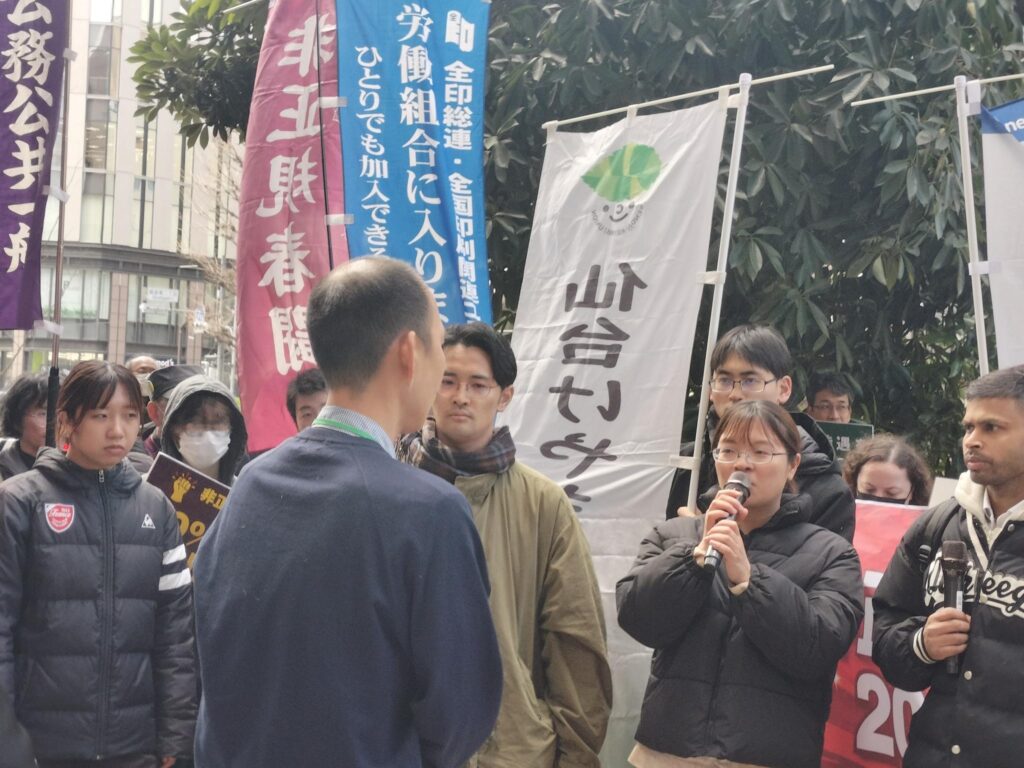
Since 2023, we have organized across national labor centers and party lines, bringing together unions from different regions to campaign for improved conditions for precarious, “non-regular workers” (see the Jacobin article on the “Spring Offensive”), which take up almost 40% of the labor force.
Since 2019, we have been organizing migrant workers from other Asian countries—especially those who come to Japan under the notorious Technical Intern Training Program (TITP). Through organizing migrant workers, we succeeded in abolishing the TITP.
We also organize families of those who died from overwork (karoshi) to hold companies accountable and win shorter working hours.
Poverty
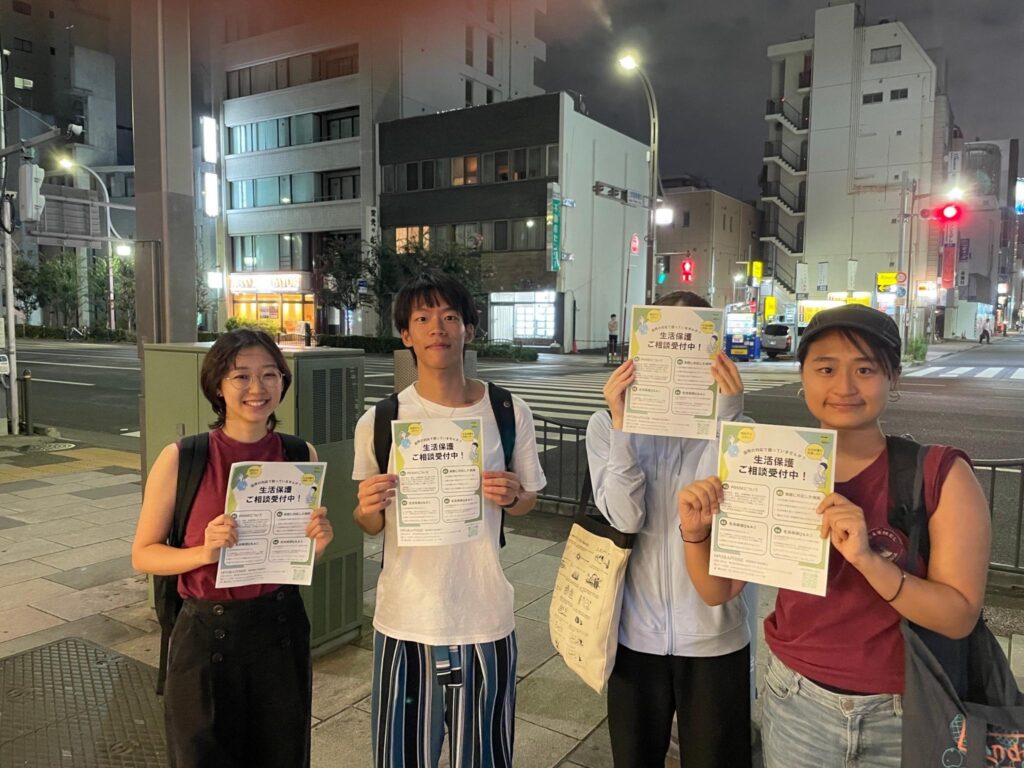
In Japan, people who fall into poverty are entitled to public assistance, but accessing it is often difficult.
Local welfare offices frequently refuse to accept applications, even though this is illegal. When people seek help, we accompany them and collectively demand that their applications be properly accepted.
Another problem we are fighting is the so-called “poverty businesses” operating in collusion with local governments. Under the pretext of supervision, authorities place welfare recipients in privately run facilities that many residents say feel like prisons—or even worse—with overcrowded rooms, insect infestations, little to no privacy, and strict curfews. Most of their welfare benefits are then taken by the operators as fees.
Ecology & Regional Economy
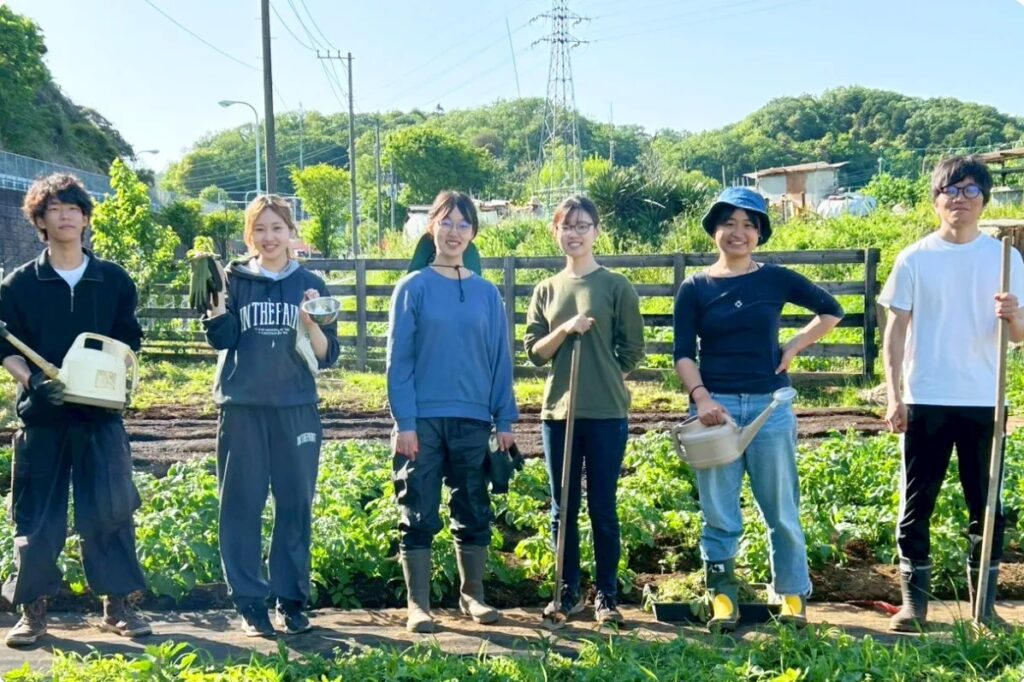
In Japan today, about one in six people live in poverty, and cases of people literally starving to death are not uncommon. Yet uncultivated farmland continues to expand year by year, while growing portions of land are held for speculation, undermining local economies and ecosystems.
In response, we have begun organizing with local residents and farmers to protect and cultivate this land and expand spaces of autonomous reproduction.
Theoretical Work and Critical Analysis
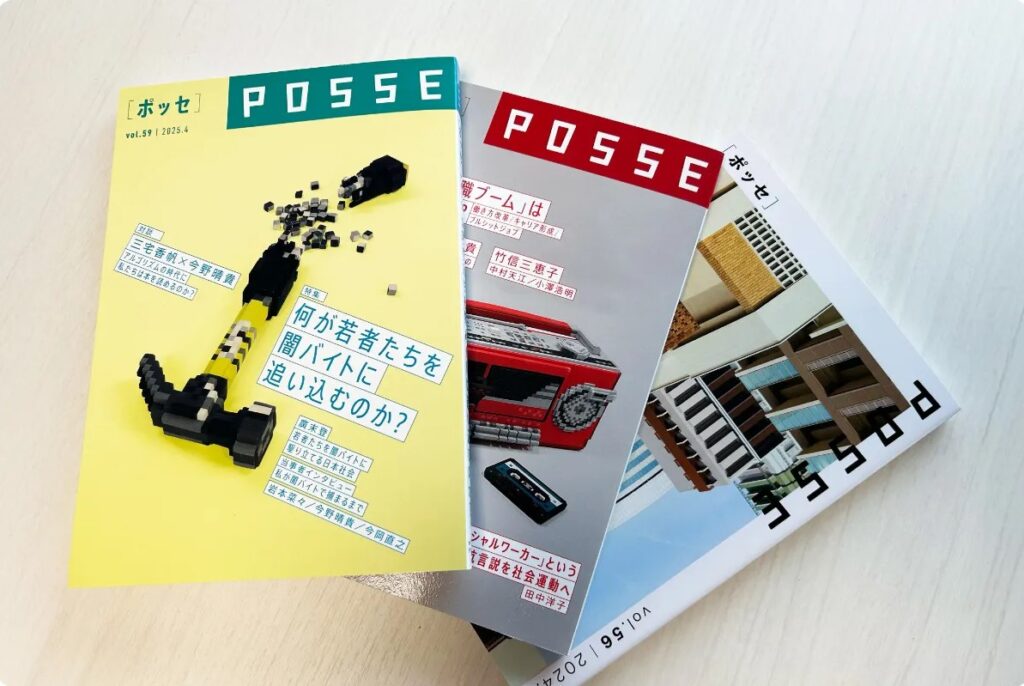
POSSE Magazine
We publish POSSE three times a year, and the magazine is available in bookstores and libraries across Japan. Since its launch in 2008, more than sixty issues have been published.
The magazine combines on-the-ground reporting on labor, poverty, and regional economies with theoretical analysis of contemporary capitalism. We publish the theoretical magazine to reflect on struggles on the ground and to envision forms of social transformation that go beyond immediate reforms.
Since its launch, it has been featured more than thirty times in the Asahi Shimbun’s “Rondan Jihyo”—a column in one of Japan’s leading national newspapers that reviews major opinion journals. Although published by a nonprofit organization, it has remained an important voice in debates on employment and poverty.
We have also published interviews with international thinkers such as Nancy Fraser, Keir Milburn, Marcello Musto, and Kohei Saito.
Our History
- 2006: POSSE is founded by Haruki Konno, the then-President (official registration completed in March 2007)
- 2008: POSSE magazine is launched
- 2011: POSSE begins disaster relief and reconstruction support through its Sendai office following the 2011 Tohoku earthquake and tsunami
- 2012: In 2012, Haruki Konno published Burakku Kigyo: Nihon o Kuitsubusu Yokai, a book that exposed the problem of “buraku kigyo (abusive, exploitative corporations)”—firms with abusive practice and extremely exploitative working conditions—at a time when such abuses were rarely acknowledged in Japan, helping shift public debate on labor conditions.
- 2014: Members and supporters of POSSE establish the labor union General Support Union
- 2019: The Foreign Workers Support Center is launched
- 2020: POSSE becomes involved in the struggle for Kurdish refugees’ right to survival in Japan
- 2023: Members of POSSE launch the “Non-Regular Workers’ Spring Offensive,” a campaign across union federations and political tendencies demanding higher wages for precariously employed workers
- 2025: POSSE transitions to a new board structure. Nana Iwamoto becomes President.
Organizers
Nana Iwamoto (President)
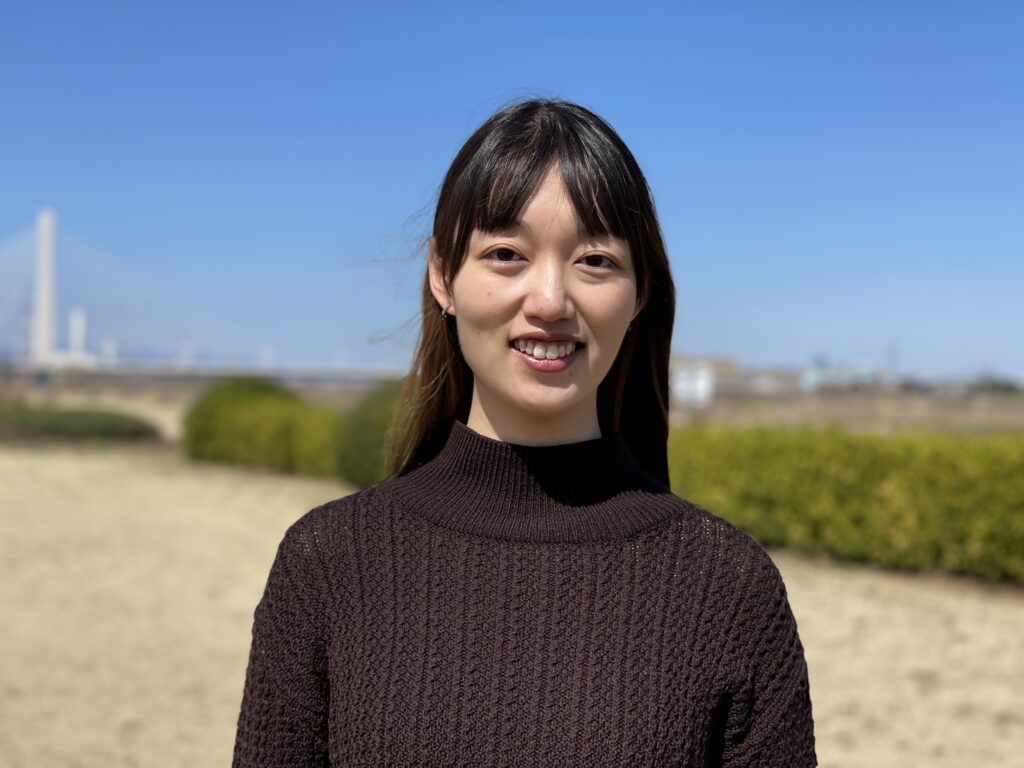
Born in 1999 in Tokyo. Graduate Student in the Graduate School of Sociology at Hitotsubashi University.
She joined POSSE in her third year of university and has since worked on poverty issues through research on student loans, policy advocacy, and support activities for people in economic hardship.
Kotaro Ogita (Executive Director)
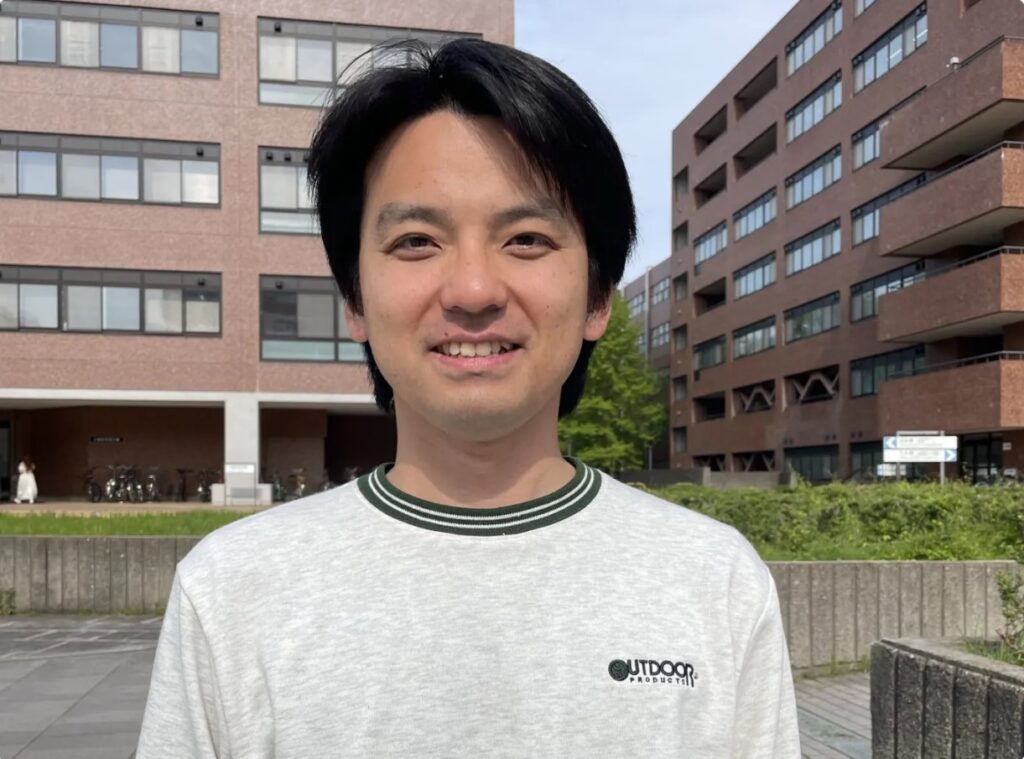
Graduate student at the University of Tsukuba.
A former worker who sought labor consultation from POSSE in 2018. After resolving his own case, he began working with the organization, addressing issues faced by student part-time workers, migrant workers, care workers, and logistics workers.
Koichiro Shigihara (Sendai Branch Director)
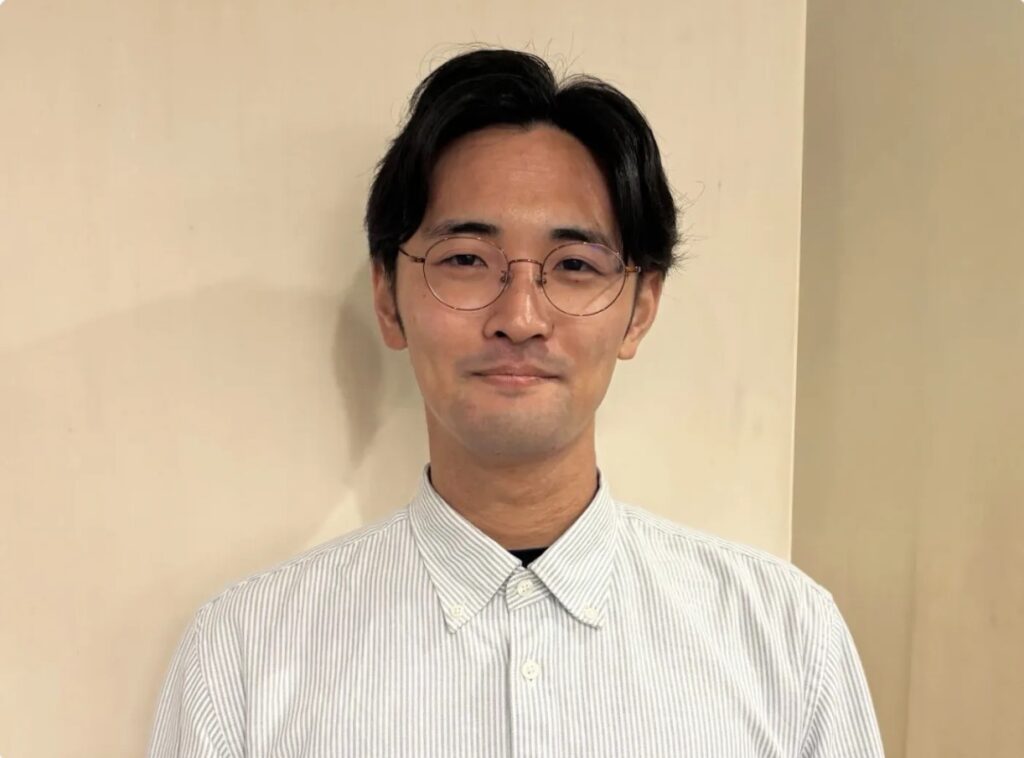
Born in 1998 in Fukushima Prefecture. Graduate student at School of Agricultural Science at Tohoku University, specializing in agricultural economics.
The experience of the Fukushima nuclear disaster led him to take an interest in issues of poverty and the environment. As the director of the Sendai branch, he is engaged in livelihood and labor consultations while exploring the connections between poverty and the ecological crisis.
Media
POSSE members appeared in the media:
・Jacobin : Japan’s Labor Movement Is Taking Up the Demands of Part-Time and Temporary Workers
・Libération : « Au Japon, des migrants recrutés en apprentissage puis réduits en esclavage »
Contact
Please contact us at info(at) npoposse.jp
 労働相談窓口案内

 042-227-5495
 生活相談窓口案内